
The Future of Automotive Pistons in Fuel-Efficient and High-Performance Vehicles
Automotive Industry Developments Focus The new automotive arena which emphasizes the need to have much higher fuel efficiency, lower emission ratings and better power efficiency at all automotive platforms that will require greater durability of existing technologies also requires higher mechanical strengths for all vehicle parts. The automotive engine is very important as fuel driven vehicles that have come back with new designs for commercial and personal uses (Hybrid vehicles for good fuel efficiency and power engine at best performing engines and sport engines).
The size of the global automotive piston market was at an approximation of USD 5.39 Billion in 2025 and is expected to grow further in the upcoming years and be evaluated at around USD 7.98 Billion in 2035 with a Compounded Annual Growth Rate of (CAGR) of about 4.00% from the year 2026 to 2035 based on newest forecast of Expert Market Research.
The Evolving Role of Automotive Pistons
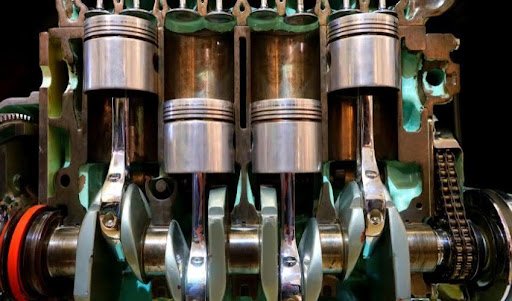
Pistons are crucial parts of the internal combustion engine They function by reciprocating within the engine cylinder thereby translating energy from the combustion of fuel into the mechanical work that powers a vehicle’s operation through a process involving connecting rods and crankshafts In pursuit of even greater fuel-efficiency and in response to rising emission targets the race for more intelligent and high-efficiency piston designs among auto makers continues.
Focus is on reduced friction in the components, reduced piston weight and enhanced temperature endurance and strength, as well as greater overall piston durability, so the direction of future pistons is linked to the progress in designing better engines; these often smaller, higher revving units will achieve former vehicle performance levels through clever piston designs.
Lightweight Piston Designs for Better Fuel Efficiency
In automotive engineering, weight reduction is a key challenge faced by engineers today. Lighter weight engine components can effectively reduce the number of mechanical losses thus a better efficiency on the overall car. Hence, piston manufacturers are looking for alternative lightweight materials and efficient shapes to minimize the weight of the piston.
Aluminum based alloys have already been used in manufacturing pistons due to their relatively low density, good thermal property,etc.
Future trends might indicate use of more advanced alloys and manufacturing processes which offer an even greater strength but at negligible added mass. Simulation and computational aided engineering methods can also be used to optimize the piston shapes and sizes. The stress, temperatures and pressures over the piston body can be determined thereby removing the unnecessary material while ensuring the robustness.
Advanced Materials for High-Temperature Operation
Today, most pistons are engineered for tough applications. Applications such as higher cylinder temperature and pressures are imposed by direct fuel injection, turbo charging, down sizing and higher compression ratio. High temperatures and high pressure levels make sure that pistons have enough durability against abrasion and distortion.
By making use of innovative materials or improved surface modifications, it is possible to improve piston durability. Surface coatings minimize friction between piston and cylinder, improve wear resistance and heat resistance. In the future, thermal durability and surface engineering will play an important part of piston technologies.
Reducing Friction and Mechanical Losses
One of the main sources of energy loss is the internal friction within an engine. Piston reciprocates tirelessly in the engine cylinder, making contact and creating friction between various engine components.
Friction is one aspect which is being tackled in order to improve engine efficiency. Developers are creating new piston skirts, rings, coatings, and surface finishes which attempt to minimize drag but maintain the important sealing aspect.
In addition to reducing wear, low-friction piston rings may further reduce energy losses and oil consumption. As fuel economy regulation continues to tighten, even internal engine energy gains become of critical importance for manufacturers.
Pistons in High-Performance Vehicles
In the realm of performance vehicles, the job of a piston requires it to tolerate much higher operating conditions and, thus, greater stresses. The piston found in a 500 horsepower car must accommodate higher operating temperatures, speeds, and pressures in conjunction with severe mechanical and thermal stress levels.
Currently, forged pistons represent a prevalent piston technology due to their excellent strength and reliability in performance-level applications. In the future, we can expect to see the convergence of the lightweight demands of performance cars and improved piston construction technologies as manufacturers integrate light materials with newer alloys as well as enhancing cooling system performance and even better tailoring of piston profile and geometry to achieve improved power density and reliability when under severe loads.
The Growing Importance of Hybrid Powertrains
Instead of abandoning the combustion engine entirely, the rise in hybrid automobiles is reshaping its role. Combustion engines working with electric motors (hybrids) are enabling an engine environment that’s less stressed and easier to predict.
This gives further incentive for piston technology advancements. Hybrid engines can’t rely on the combustion system exclusively for every operational scenario, thus demanding precise, compact, yet rugged piston configurations operating within well defined operational windows.
With electric power assisting, manufacturers can focus the hybrid engine on optimum efficiency at specific operating conditions. This is where advanced pistons, which enhance fuel combustion, minimize friction and can accommodate increased piston speeds and temperatures, lend substantial added benefit.
Manufacturing Technologies Are Transforming Piston Production
Future developments in automotive pistons will be driven by progress in manufacturing techniques. Digital simulation and machine control in all production processes such as precision forging, advanced casting, machining processes and additive manufacturing of pistons can help optimize performance and uniformity.
The development time and identification of shortcomings may be reduced as piston designs can be simulated without full fabrication. Automation may be incorporated to streamline manufacturing and ensure quality control. The need for tight tolerances in components, which are a by-product of increased performance from the automobile, suggests that piston manufacturers will require enhanced technological capability.
Sustainability and Longer Component Life
Environmental issues are increasingly dominant in the automotive supply chain. Pistons manufacturers, for example, are searching for ways to reduce material content, increase production efficiency and increase component endurance.
An endurance piston will result in less repair and replacement engine components, extending the life of the entire vehicle. Manufacturers may be interested in materials that are recyclable, or more economical production processes.
The search for lighter pistons also results in additional environmental benefits as fuel economy is improved on engine vehicles. This is especially true in hybrid vehicles, as efficient engine operation is critical in overall energy management.
Challenges for Piston Manufacturers
Despite existing possibilities there are a number of factors piston manufacturers should keep an eye on. The growth of battery electric vehicles can have implications for the demand of pistons in the longer term for some segments of passenger vehicles since electric powertrains do not contain combustion engines.
However regulations regarding emission requirements will force engine manufacturers to develop even more efficient engines. This consequently makes it necessary for suppliers to work on pistons which can be used with these new technologies and still fulfill very strict performance targets.
Furthermore competition throughout the car parts business will drive the manufacturers toward more efficient ways of manufacturing and controlling cost. This will be favorable to players investing in research and new material know-how together with high precision manufacturing and innovative design.
What the Future Holds
Looking Ahead: The Key Driver for Automotive Pistons “The trends for automotive pistons in the coming decade are driven by the pursuit of achieving a balance in engine efficiency, performance, durability and the reduction of harmful exhaust emissions”, said a senior research analyst at TechNavio. He also expressed that, “Automakers would further invest to make pistons lighter, enhance their rigidity, make them highly thermal resistive and lower the friction factor.
Given the growing hybrid cars market in the automotive arena the demand for pistons in this segment will rise as car manufacturers are combining both, the internal combustion engine and electrical systems for hybrid cars.
Apart from this, the demand for more rigid and fuel efficient pistons to endure severe operating temperatures would be higher in premium automotive products and commercial vehicles.” “The automotive pistons market is expected to grow from approximately USD 5.39 billion in 2025 to USD 7.98 billion by 2035 with a compound annual growth rate (CAGR) of 4.00%”, noted a TechNavio analyst.
Conclusion
The evolution of automotive pistons is evolving concurrently with the other evolution that is transforming the automotive industry. The need for fuel-efficient engines, hybrid powertrains and high performance applications is prompting manufacturers to engineer parts that are becoming stronger, lighter, longer-lasting and capable of operating in environments of ever-higher stress. The use of sophisticated materials, low-friction coatings, superior designs and modern manufacturing technologies will govern the future generation of piston systems.
Although the growth of all-electric vehicles represent a long-term threat to automotive pistons, the continued existence of the hybrid vehicle and increasingly complex combustion engines will likely perpetuate the demand for innovative piston technologies.
The race to increase efficiency and enhance performance will enable those piston manufacturers that invest in advanced engineering and green manufacturing to satisfy the coming demands of the automotive industry.
Author Bio
This is Aryan, I am a professional SEO Expert & Write for us Business blog and submit a guest post on different platforms- writeforusbusiness provides a good opportunity for content writers to submit guest posts on our website. We frequently highlight and tend to showcase guests.


